


Selena
Live chat
Your first 2 minutes are free
Tarot can show you the need hiding under the argument. The cards I watch for, a 5-card couples spread, and what to do after the reading.
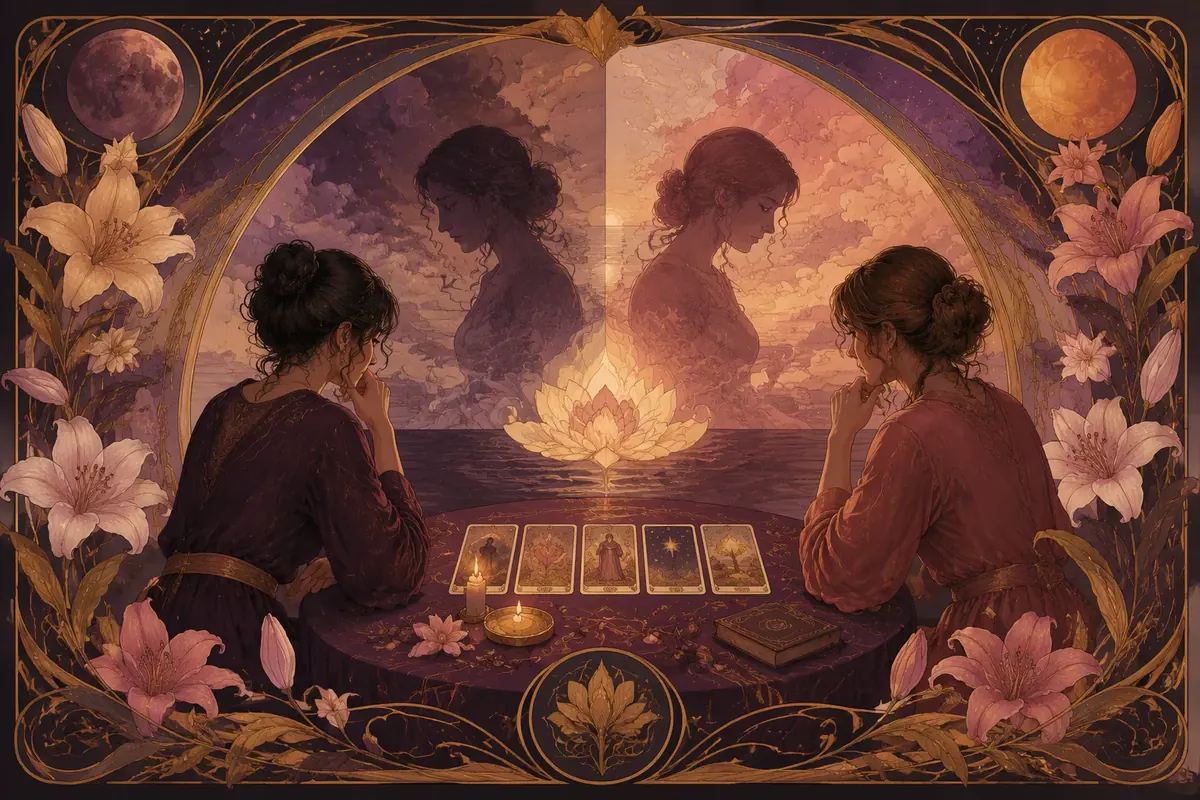
When a couple keeps talking past each other, tarot's real job is to name the need hiding underneath the argument. The fight is almost never about the thing you are fighting about, and the cards are very good at pointing at what it is actually about.
I have read for a lot of women who open with some version of "we love each other, but every serious conversation turns into a wall or a war." If that is you, and you have been replaying last night's argument on a loop since 6am, that loop is rumination. It feels like problem solving and gives you nothing. A reading is one way to interrupt it, because it forces you to look at the pattern from above instead of reliving one scene from inside it.
When she asks about the dishes and he hears "you never respect me," they are no longer in the same conversation. One of them is defending against an accusation that was never made. The other is asking for reassurance she never actually named.
Most communication breakdowns run on three fears: the fear of not mattering, the fear of being controlled, and the fear of being left. Every couple I have read for runs on at least one of these. The words change. The fear underneath rarely does.
Tarot will not put words in his mouth, and I would not trust any reader who claims it can. What it does well is surface the layer you cannot see while you are busy being hurt.
This is the layout I use when the question is "why can't we talk anymore." Shuffle while holding the last argument in your mind, the actual scene, not your edited version of it.
One warning from experience: position 2 is where people cheat. If you draw a harsh card for him and immediately read it as proof that he is the problem, stop. Ask what that card would mean if a friend drew it about you. If you want more positions and a fuller map of the relationship, my 5-card love spread walks through a different angle on the same territory.
Swords rule the mind and the spoken word, so in a communication reading they do most of the talking.
The Two of Swords is the stalemate card, two people blindfolded with arms crossed, each waiting for the other to go first. When it lands in a couples reading I usually find that both partners already know the truth and have silently agreed not to look at it. That agreement is the problem.
The Five of Swords is, in my opinion, the most honest card in the deck about modern arguing. It shows a victory that cost more than it won. If this card keeps appearing, somebody in the relationship has started arguing to win instead of arguing to understand, and winning an argument against the person you share a bed with is always a loss.
The Three of Swords points at words that cut and have not healed, usually one specific sentence that both of you could quote.
On the repair side, the Six of Swords promises movement toward calmer water, usually through a hard but quiet conversation rather than a dramatic one. The Ace of Swords is the breakthrough, one clean honest sentence that cuts through weeks of fog. And the Two of Cups, when it shows up among all those blades, is the deck reminding you that the respect is still there under the noise.
A spread that names the problem changes nothing by itself. The work happens in the next conversation, and it is smaller than you think.
If the cards showed you the fight was about feeling unloved, say that. Out loud. "When you went quiet, I felt like I didn't matter" lands completely differently than another round about the dishes. It is harder to say. Vulnerability invites a different response than accusation, and defensiveness is a reflex you cannot trigger if you never fire the accusation.
Two more things I tell clients, because they come up in almost every reading like this:
Healthy couples argue. What separates the ones who last is better repair. Pretending the fight never happened does not repair anything, and keeping score actively corrodes it.
Repair looks like circling back once you are both calm, naming what each of you needed in that moment, and acknowledging the hurt without demanding to be declared right. "I'm sorry that landed the way it did" dissolves tension that three days of polite silence will only harden.
You can bring the cards into this step too. Pull one card together, or alone, asking "what was that argument really about." I have watched this single pull end week-long standoffs, because the dishes turn out to be about feeling unappreciated, the late reply turns out to be about feeling unimportant, and suddenly there is something real to talk about. Over time this rhythm of rupture and repair builds trust instead of eroding it. If he has gone quiet rather than combative, that is its own pattern, and I wrote about it separately in what tarot says about emotional distance.
Sometimes a reading shows one person doing all the reaching while the other keeps the door shut. I will not dress that up. Communication takes two people willing to be honest and willing to be changed by what they hear. If only you are trying, no spread fixes that, and the honest next question is whether you are both still in this. How you phrase that question matters, so before you ask it, read my guide on asking tarot about your relationship.
More often what I find is two frightened people who never learned to feel safe being vulnerable, each mistaking the other's armor for indifference. Naming that, gently, is usually where the repair begins. And if you want a second pair of eyes on the pattern between you two, that is exactly what my in-depth love reading is for.
The Swords suit governs communication. The Two of Swords shows a standoff where both partners avoid a truth they already sense, the Five of Swords shows arguing to win rather than to understand, and the Three of Swords marks words that wounded. The Ace of Swords, by contrast, signals an honest breakthrough, and the Six of Swords shows the couple moving into calmer territory.
Ask questions that focus on the dynamic, not on mind reading. "What is the real need under our arguments" or "what blocks us from hearing each other" will produce more useful cards than "why won't he listen." Shuffle while recalling a specific recent argument, since a concrete scene anchors the reading far better than a vague sense of frustration.
No card fixes a conversation for you. What tarot does is reveal the fear or unmet need driving the same recurring fight, which changes what you say next. Couples who name the real feeling, such as "I felt unimportant," instead of relitigating the surface topic, tend to see arguments shorten and repair happen faster.
In a relationship context, the Two of Swords describes a mutual stalemate: both partners are guarded, both are avoiding a truth they privately recognize, and each is waiting for the other to move first. It usually signals that honesty feels unsafe rather than that love is gone, and it asks one of you to lower the blindfold and speak plainly.
Free love reading
Want the honest read on your situation?
Articles can only speak in general. I'll pull the cards for your question and send your reading by email. No payment, no account. Just the truth, gently.
Get my free reading →4,600+ readings delivered · normally $29, free today
Prefer a full private reading? Browse my readings
Your love questions deserve a straight answer
Get my free reading → 1